

© Sophie Bell
Landowner Advice and Small Grant Scheme
Landowner advice and small grant scheme
As part of the Thriving in a Wilder Trent project, Nottinghamshire Wildlife Trust received £100,000 match funding from Severn Trent to support habitat creation on privately owned land along the River Trent. A whole range of different projects are underway that also support nature connectivity along 90km of the River Trent.
December 2025
Meering Lane, Besthorpe
In the village of Besthorpe, NWT worked with local landowners Julie Barnes and Stewart Berry to improve their grassland site. Local contractors were employed through the grant scheme to create a wet scrape in the field, to allow standing water and damp ground conditions for the benefit of wading birds throughout the year, like lapwing, snipe, and redshank. In addition, a new hedgerow was planted along the boundary of the field with a wildflower buffer strip, further increasing the feeding and nesting area for many species of bird and invertebrate.
Of the work, Julie said “We are delighted to be part of this project and very grateful for the help and support, both in terms of advice and financial support from the NWT. Its so exciting to be the current stewards of this land and to do what we can to support wildlife here, working with nature and the natural processes.”
With this field being situated next to the River Fleet, as well as next door to NWT’s Besthorpe Nature Reserve, we can expect it to become an important sanctuary area for migrating species of bird as well as resident wildlife.
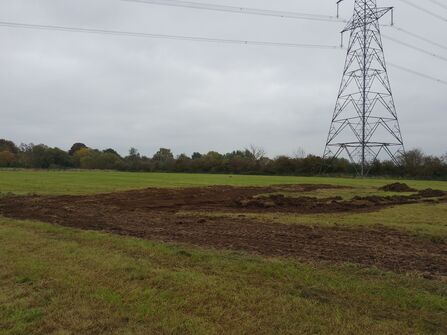
Scrape being created in the field at Meering Lane - Photo credit: Nottinghamshire Wildlife Trust
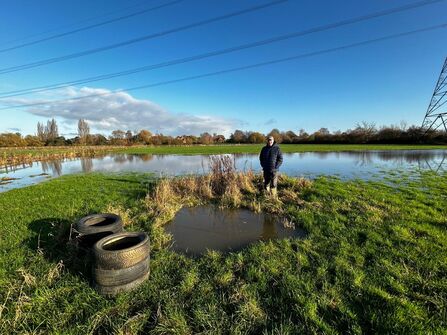
Completed scrape already holding water - Photo credit: J. Barnes
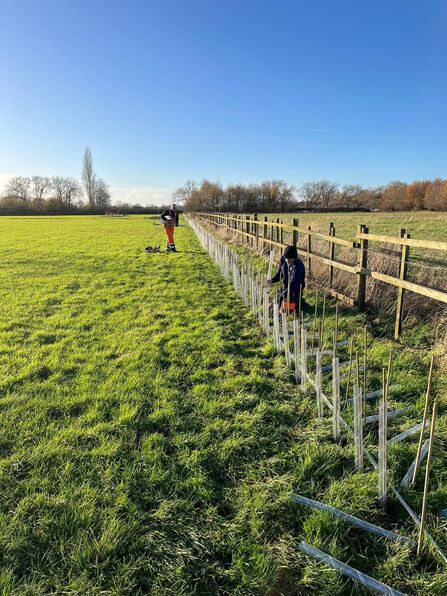
New hedge being planted at Meering Lane - Photo Credit: J. Barnes
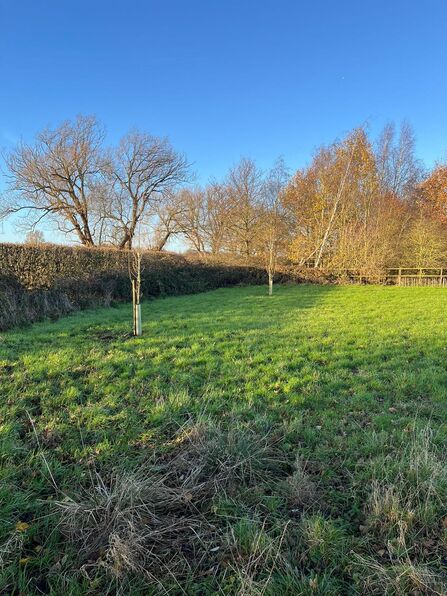
Newly planted black poplar trees - Photo credit: J. Barnes
Riparian planting (various farms)
At several farms next to the River Trent, NWT has worked with the landowners through the grant scheme to create riparian buffer strips along the river. This has involved planting trees next to the river, creating wildflower strips with floodplain flower mixes, creating new hedgerows and fencing off sections of the riverbank to protect the new riparian strips from livestock and prevent bank erosion by them trampling next to the river.
Planting trees next to rivers is hugely beneficial not only for wildlife by creating more habitat along river corridors, but also in mitigating the impacts of flooding and climate change. Trees along the river can help stabilise the banks with their roots, cast shade on the water helping prevent its temperature increasing, reduce pollutant run-off from the surrounding land and lock up more carbon. They can intercept falling rain with their canopy, allowing it to more slowly soak into the ground and their roots can soak up more water, preventing flash flooding. When the river does burst its banks, their trunks and deadwood help slow the flow of the water, minimising the potentially devastating effects of flooding.

Newly planted hedgerow on farm - Photo credit: I. Wilde
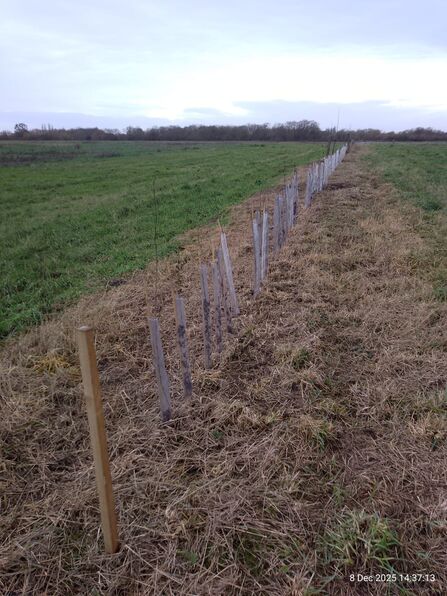
Newly planted hedge at Riverside Farm - Photo credit: I. Wilde
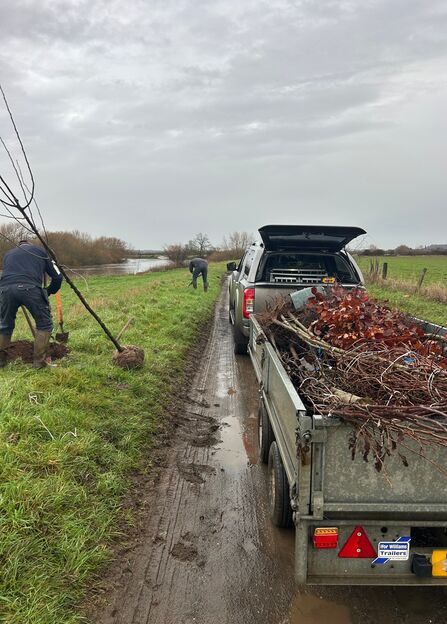
Farmer planting trees along the River Trent at Riparian Buffer Strip - Photo credit: H. Priestley
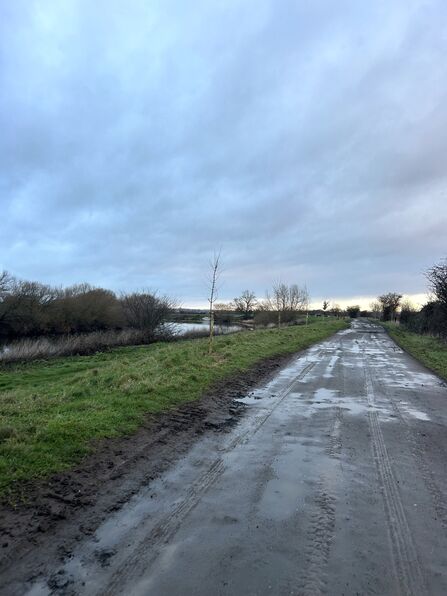
Newly planted line of trees next to the River Trent - Photo credit: H. Priestley
November 2025
Upper Saxondale
In the village of Upper Saxondale funding was secured to open out sections of the woodland, enjoyed by many local residents. Contractors were employed to create glades within the woodland and thin out some of the sections of trees to allow more sunlight to penetrate the ground and create more space for the remaining trees to flourish. Volunteers from the village helped to plant an array of bulbs, plug plants and shrub trees in the woodland to add structure and biodiversity, by creating an understory of flowering plants to encourage more insects to thrive in the woods. These plants will provide flowers from early spring right through to summer so they can be enjoyed by many species as well as visitors.
NWT collaborated with the Upper Saxondale Parish Council and local residents on the ground to further open up the glade areas created by the contractors and to create habitat piles in the woodland with the felled trees, such as log piles and dead hedges. The residents were trained by NWT in management techniques like coppicing, to support them in managing their woodland going forwards.
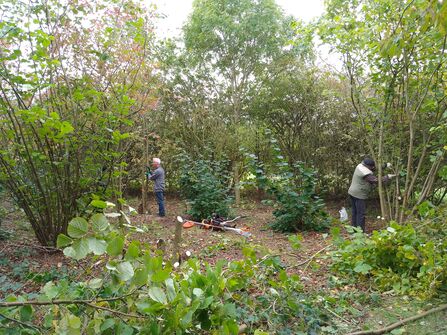
Volunteers coppicing in Upper Saxondale - Photo credit: Nottinghamshire Wildlife Trust
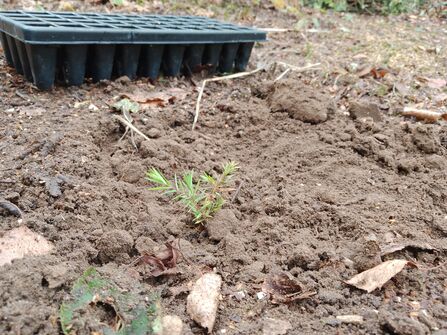
New understory species being planted in the woodland - Photo credit: Nottinghamshire Wildlife Trust
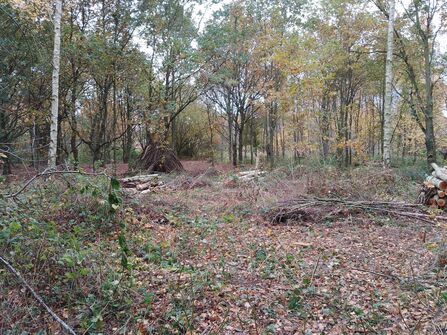
Newly created glade with log piles in Upper Saxondale - Photo credit: Nottinghamshire Wildlife Trust
Toton Fields Nature Reserve
At Toton Fields, contractors were employed through the grant scheme to remove scrub from the grassland areas. Bramble had taken over much of the grassland, out-competing many species of wildflower and grass. By pushing back significant areas of bramble and scrub, the grassland can flourish once again for the benefit of many species of wildflower and insect. The remaining bramble will also provide a source of nectar through their flowers, as well as food for many species through the berries and shelter for nesting birds. Creating a mosaic of habitat like this, rather than just having one more dominant type, can benefit far more species and help promote greater biodiversity.
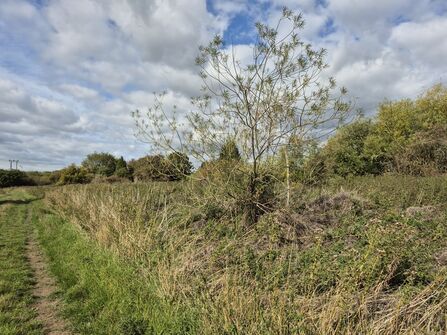
Toton Field site before scrub clearance - Photo credit: C. Riley
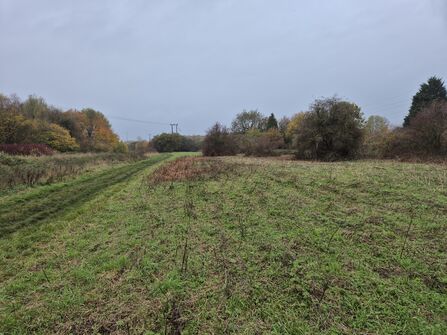
Toton Field site after scrub clearance - Photo credit: C. Riley
Lambley Reed Pond Nature Reserve
Grant scheme funding at Lambley Reed Pond Nature Reserve allowed contractors to thin out some of the dense stands of trees around the edge of the pond, allowing more dappled light to reach the ground. In addition to this, the Lambley Reed Pond Committee were able to purchase and plant bulbs and plug plants into the new sunnier areas, allowing the understory to flourish once more and create a diverse food source for many native insects. In addition, plants were bought to supplement areas of the wildflower meadow and the pond margins, introducing new species for greater diversity. Finally, funding allowed contractors to carry out management work on the reedbed, creating more structure for it to grow. Different age stands in reedbed, as well as a mix of dense reed and open pools of water, is a great way to create a home for lots of species of invertebrates, like dragonflies, as well as for fish, amphibians and birds.
Lambley Reed Pond is an important site for common toad, with nearby toad crossing points in the village which are patrolled each year by volunteers. This work aimed to improve the habitat on site for toads, through the creation of log piles and hibernacula for them to hibernate in as well as a healthier pond with lots of vegetation for their toad spawn and tadpoles. While some of the work was focused on toads, there will be benefits to many other species as well.

Community group planting in the newly open glade at Lambley Reed Pond - Photo credit: Nottinghamshire Wildlife Trust
October 2025
The Hook
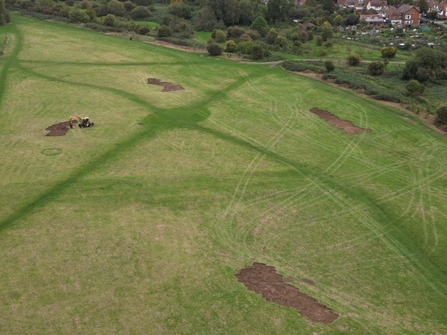
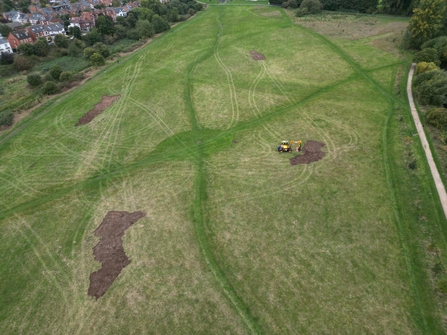
Scrape creation has been completed at The Hook, a nature reserve site located near West Bridgford on the River Trent. Scrapes are shallow depressions in the ground, which can hold water creating excellent ephemeral wet habitat for a range of invertebrates and birds, and are vital to breeding populations along the Trent corridor. The scraped back earth has exposed soil upon which wildflower seed will be sown, boosting the botanical diversity of the meadow too. The Hook is owned by Rushcliffe Borough Council and management of the reserve is supported by the volunteer group Friends of the Hook.
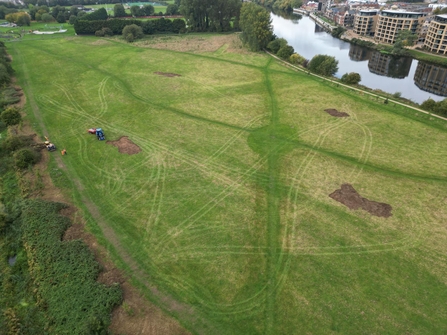
Credit Simon Blant
May 2025
The first of these projects was completed in early May at Notts County Sailing Club in Hoveringham, with the installation of a new tern raft. Members from the sailing club put the tern raft together; they provide valuable nesting platforms on the water, away from predators and demonstrate how nature and watersports can exist side by side, sharing a mutual respect for the local environment.
Project Officer, Miriam Lawley commented “It’s been a pleasure to work with the team at Notts County Sailing Club and support the installation of a new tern raft. The River Trent is an important corridor for many migrating birds who breed in the UK every summer, including the Common Tern which is a species of conservation concern. This new raft will be incredibly valuable for these birds safely rearing chicks, as well as the opportunity for users of the lake to enjoy watching them.”

Credit John Hooper
The tern raft ready for launch onto the lake. Credit John Hooper.


This project is funded by the Government's Species Survival Fund. The fund was developed by Defra and its Arm's-Length Bodies. It is being delivered by The National Lottery Heritage Fund in partnership with Natural England and the Environment Agency.