
Well, spring is almost here. A time of renewal and re-emergence of life in all it's forms. Birds begin nesting at this time and have various strategies to guard against predation. Nests are often well hidden, especially those of smaller, more vulnerable species. Most ground nesting species such as waders and terns, employ camouflage in order to fool predators. Their nests are usually no more than a scrape or depression, sometimes sparsely lined with grasses. The pattern on the eggs closely matches the surroundings of, for example, sand and shingle.
Nest Protection Behaviour

Meadow Pipit in flight - Photo credit: Mike Vickers
Mike Vickers explains the details of bird ground-nesting behaviour and what to look out for as nesting season begins!

Oystercatcher egg - Photo credit: Mike Vickers
Some aquatic species such as grebes, don't hide their floating nests, but rather cover their eggs with nesting material before leaving the nest mound. Once hatched, the small chicks often sit on the back of their parents and are fed whilst aboard. Ducks nest in drier situations and their well-hidden nests are lined with feathers and down which is again used to cover their eggs when the sitting bird is absent.

Ringed plover chick - Photo credit: Mike Vickers
Some chicks leave the nest immediately after hatching and are known as precocial species. This group includes waders, ducks and gamebirds. Though they can feed themselves and are born with camouflaged and protective down, they are still vulnerable to predators. On hearing their parents alarm call they instinctively know to freeze and stay low. To help deter ground predators further, waders and other ground nesters use distraction techniques. I have witnessed birds such as Ringed Plover use a "broken wing display", essentially the parent birds feign injury in order to draw the would be predator away from their chicks.

Meadow pipit carrying food - Photo credit: Mike Vickers
Other species use almost the exact opposite activity of displacement behaviour. If walking through a field of nesting Lapwings you may see a bird nonchalantly pecking the ground, pretending to feed, giving the appearance of being unconcerned with a "there's nothing to see here" looking attitude. If too close though, Lapwings will call and dive down bringing neighbours in to try and chase off intruders whether they be human, cattle or crows.

Arctic Tern looking for its next hapless (or is it hatless?) target - Photo credit: Mike Vickers
Displacement behaviour is also often demonstrated when colonial nesting species such as gulls are in conflict with a neighbour. Commonly, this takes the form of a bird pulling at a tuft of grass- it's a bit like us thumping down on a table in the heat of an argument. It's a conflict of emotions, instead of directly hitting the antagonist we release tensions on an inanimate object. Sometimes attack rather than passive defence is the best strategy. Many raptor species will fly at anything seen as a threat to their offspring. Fulmars will eject foul-smelling vomit, gulls and Fieldfares will defecate on an intruder and those who have visited the Farnes without a hat will testify to the sharpness of an Arctic Tern's bill!

Yellow wagtail carrying food - Photo credit: Mike Vickers
Small ground nesting birds such as Larks, Pipits and some Wagtails try to keep predators from their nests by not advertising them. Instead of returning directly to their nest they fly in and land some distance away, crouching low, they then creep through the vegetation to reach their eggs or chicks.
Look out for...
- Grebes on your local lakes, especially Great Crested. From March, pairs will indulge in elaborate courtship displays. Later, watch out for the humbug-striped chicks hitching lifts on their parent's backs.
- The Farne Islands is a great place to visit and encounter seabirds at close range. Take a hat and/or carry a walking pole above head height to deter the protective behaviour of Arctic Terns.
- Lapwings indulge in spectacular tumbling, aerial displays over breeding areas accompanied by their glorious iconic calls.
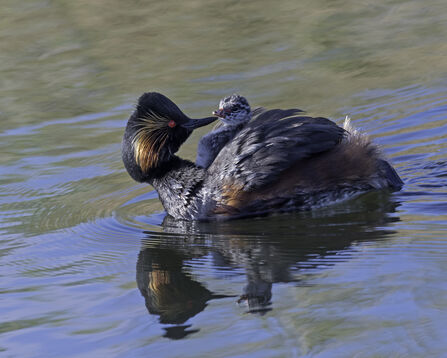
Black-necked grebe with chick - Photo credit: Mike Vickers
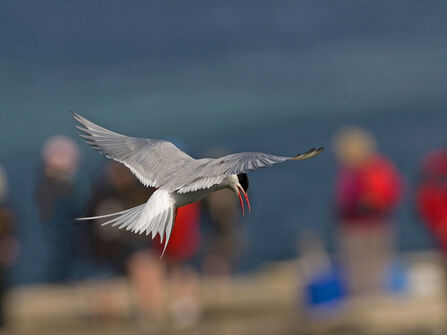
Arctic Tern looking for its next hapless (or is it hatless?) target - Photo credit: Mike Vickers
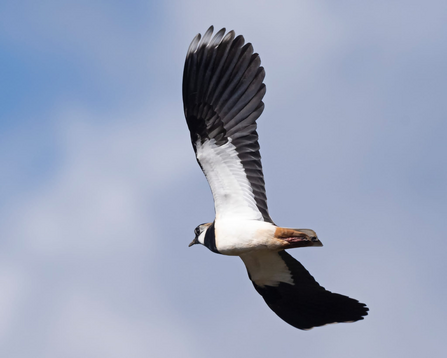
cr. Mike Vickers
At this time of year it's important to be thoughtful and responsible. Dogs off the lead can cause havoc on beaches above the high water mark and in other areas where ground nesting birds occur. I've personally witnessed a dog running uncontrolled through woodland kill a helpless Woodcock chick.
Please do read and follow our guidance with regards dogs on leads on our nature reserves to protect the wildlife, especially ground nesting birds at this time of year. And if you are a dog owner then consider your dog to become an Ambassadog with our Lead by Example campaign.

Skylark in flight at Tiln North - Photo credit: Mike Vickers