Wildlife charity highlights importance of keeping dogs on a lead to protect nesting birds

Wildlife charity highlights importance of keeping dogs on a lead to protect nesting birds

Nottinghamshire Wildlife Trust backs new measures to protect livestock, but highlights the importance of keeping dogs on a lead to prevent disturbance and harm to ground-nesting birds.

Following a change in the law designed to provide farm animals with greater protection from dog attacks, Nottinghamshire Wildlife Trust is urging dog owners to keep their pets on a lead when visiting nature reserves to prevent disturbance of ground-nesting birds and other wildlife.  

Earlier this month (18th March 2026), the maximum penalty for livestock worrying in England and Wales has been raised from £1000 to an unlimited fine, and police now have powers to seize and detain a dog where they have reasonable grounds to believe it has attacked or worried livestock and that there is a risk it could do so again. 

Nottinghamshire Wildlife Trust, which runs an extensive conservation grazing programme with both sheep and cattle and has welcomed the strengthening of the law relating to livestock but has also highlighted the risk posed to wild birds by dogs off leads on nature reserves.  

Ewe and lambs in field

Speaking about the issue, the Trust’s Head of Communications Erin McDaid said:  

“Getting out into nature is vital to many of us for exercise and wellbeing, but as an increasing numbers choose to enjoy their time in nature accompanied by their pet dogs the presence of dogs, off a lead can be a real issue for wildlife – especially in spring.  Wild birds perceive dogs as predators and when dogs roam freely, birds may stay away from or even abandon their nests - leaving eggs and chicks cold and unprotected.” 

Whilst most dog owners are enthusiastic about nature and wouldn’t perceive their pet as a threat to wildlife, even the best-behaved dogs can unintentionally cause damage or distress, simply by following their natural curiosity. 

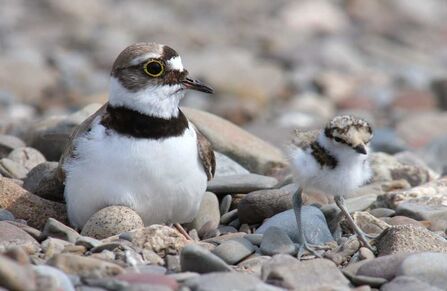
Erin added: “People often think of birds’ nests as being high up in trees, but a surprising number nest on the ground or just above it, in low bushes. Ground nesters include skylarks, nightjars and curlew, and whilst it is true that dogs roaming free can be devastating for these species, dogs wandering off paths on nature reserves can also be a real problem for species such as dunnocks, willow warblers, chiffchaff and even blackbirds which all sometimes nest close to the ground.” 

A question of balance 

Erin added: “We are sometimes asked why, when there is so little space left for wildlife, do we allow dogs on our sites at all? We believe that connecting people with nature is vital a vital part of protecting it and recognise that for many dog-owners this connection can be created whilst exercising their dog.  The perfect compromise is to experience and enjoy wildlife from the paths – whether you’re on two legs or four!”  

To help get this message across, the Trust launched the Lead by Example campaign last year to highlight the need for dogs to be on leads and to recognise and reward responsible behaviour. At a handful of sites, including Attenborough and Skylarks Nature Reserves, the charity has enlisted the help of responsible dog owners to spread the message about the important of keeping dog on a lead and picking up pet’s poo – accompanied by their ‘Ambassadogs’. The Trust is currently recruiting volunteers and ‘Ambassadogs’ to help extend the campaign to the Idle Valley Nature Reserve, its largest site, near Retford.  

As well as reducing disturbance of birds, keeping your dog on a lead will also reduce the disturbance of mammals, amphibians and reptiles. It also prevents dogs disturbing wildlife on lakes and rivers and limits the impact of dog poo, pee and pollution linked to flea treatments. 

Erin added: “Each spring we issue the call to dog owners to take extra care to ensure that their pet’s don’t scare adult birds or trample eggs, and farmers have to repeat their concerns about dogs worrying livestock, particularly at lambing time – but these seasonal messages can fade over time. This is why we now call for people to keep dogs on leads when visiting our nature reserves – whatever the time of year."

Read more

To find out more about our Lead by Example campaign visit our webpage.

Visit Lead by Example campaign

 You can also find out more about the nest protection behaviour of ground nesting birds in our latest blog by naturalist Mike Vickers.

Read Nest Protection Behavior blog