
Pupils from Wild Days Lodge Forest Pre-school

Pupils from Wild Days Lodge Forest Pre-school
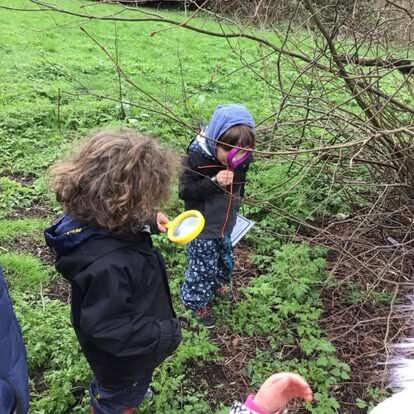
Picture a group of three-year-olds crouched in the mud with magnifying glasses, completely fascinated by a woodlouse. There are no worksheets or instructions, just genuine wide-eyed curiosity about the natural world.
That is a typical morning at Wild Days Lodge Forest Pre-School in Mapperley, Nottingham.
From both experience and growing research, we know that the relationship children form with the natural world in their earliest years can shape how they value and care for it later in life.
According to the Shropshire Wildlife Trust¹, young people's connection to nature drops sharply from the age of 11 and doesn't recover until they are 30. This means the early years window is arguably the most critical opportunity we have to shape future guardians of nature.
If we want adults who genuinely care about protecting our wildlife and wild places, we need to start long before secondary school. We need to start before they can read.
The numbers tell a sobering story. UK children today spend roughly half the time playing outside that their parents did. Meanwhile, a 2025 systematic review published in Child and Adolescent Mental Health² highlights growing evidence that nature connection in children leads to measurable improvements in social skills, resilience, attention, and wellbeing. The Wildlife Trusts³ also found that 81% of children said spending time in nature made them feel calm and relaxed.
Earlier this year, our blog exploring the relationship between outdoor nurseries and phone addiction received media attention for highlighting concerns around excessive screen use in early childhood and the importance of outdoor play.
The response showed just how strongly many families feel about helping children reconnect with the real world.
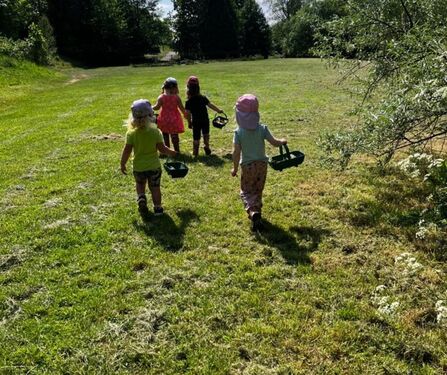
Pupils of Wild Days Lodge Forest Pre-school with baskets in a field.
Wild Days Lodge Forest Pre-school pupils exploring outside with a magnifying glass.
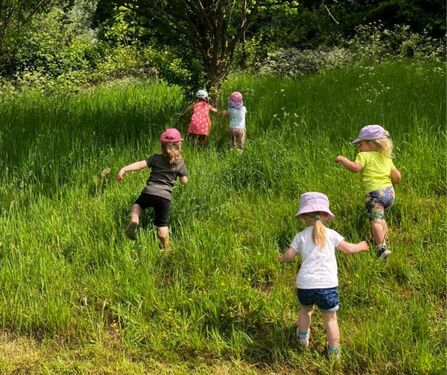
Wild Days Lodge Forest Pre-school pupils exploring outside in long grass.
At Wild Days Lodge, outdoor learning is part of everyday life. Our site within the Mapperley Hospital Conservation Area gives children space to climb, explore, investigate and ask questions about the world around them. Our award-winning team of Early Years practitioners believes children learn best when they are engaged, curious and actively involved in their environment. Rather than teaching conservation through formal lessons, we focus on creating meaningful outdoor experiences that help children care about nature naturally.

Wild Days Lodge Forest Pre-school pupils around their campfire
Each day ends with campfire reflections, where children gather together to talk about what they have discovered outdoors, from birds and insects to changing weather and seasonal signs. Activities such as bug hunts, birdwatching and wildlife investigations encourage curiosity and observation skills, while helping children develop confidence outdoors. During events like the Big Garden Birdwatch, children make bird feeders, use binoculars and continue activities at home with their families.
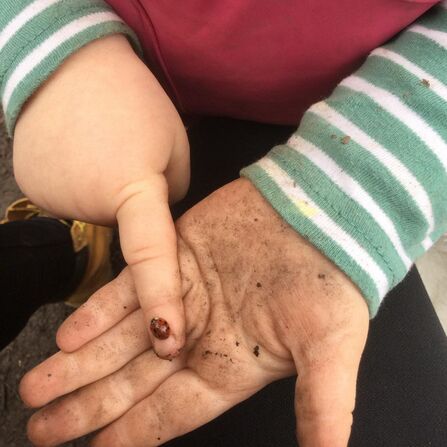
Wild Days Lodge Forest Pre-school pupil with a ladybird
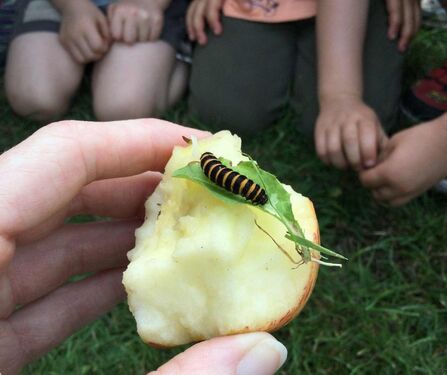
Cinnabar moth caterpillar being talked about with pupils
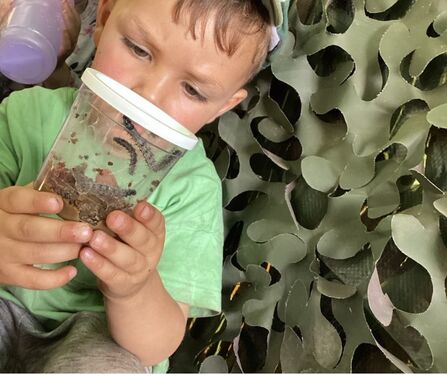
Pupil examining a jar of caterpillers
Our environment is also carefully managed to support wildlife, with native planting and habitats designed to attract birds, bees, butterflies and amphibians. Children are encouraged to see themselves as caretakers of these spaces and quickly develop a strong sense of responsibility for the world around them.
We are proud holders of the Woodland Trust Green Tree Schools Gold Award⁴ and are working towards the Plastic Free Schools award through Surfers Against Sewage⁵.
Children build resilience, independence and a lasting appreciation for nature through nursery education that encourages outdoor play, supported risk-taking and year-round exploration, children. Families often tell us their children become passionate wildlife advocates at home, taking that curiosity and care far beyond the pre-school gates.
One of the most rewarding parts of our work is watching children become nature advocates at home. Families tell us their child now insists on stopping to look at every beetle on the pavement, asks questions about birds at the garden feeder, or refuses to let anyone step on a worm. The children become the teachers.
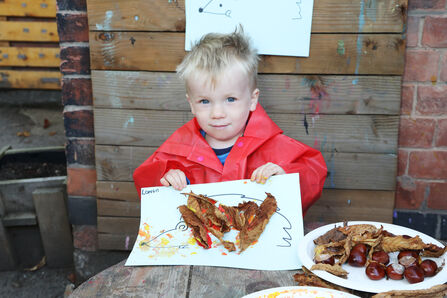
Pupils natural artwork
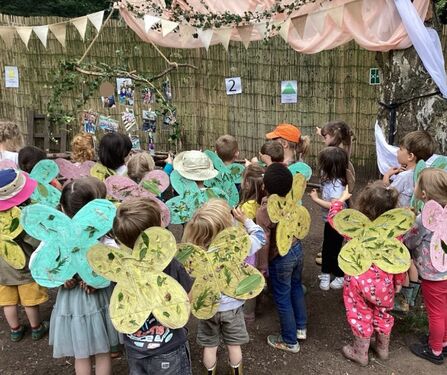
Homemade butterfly wings
You don't need a forest or a conservation area to start. You need a patch of ground, a willingness to get muddy, and a belief that the natural world matters. Some of the simplest things make the biggest difference:
Wild Days Lodge Forest Pre-school warmly invites any local nurseries, childminders or early years settings to get in touch with the team directly. They love talking about this, and they would be delighted to share ideas or resources, or simply swap notes on what works.
Wild Days Lodge Forest Pre-School | Mapperley, Nottingham | wilddayslodge.co.uk | 07942 497 700
Wild Days Lodge holds the Woodland Trust Green Tree Schools Platinum Award, is a Pearson National Teaching Awards Finalist, and is working towards the Surfers Against Sewage Plastic Free Schools Award.